 VulnX CTF
Schedule
| START | END | Talks (JN TATA AUD) | CXO Tracks (Hall A) | VulnX (Hall C) | Workshop (Hall B) | Village |
|---|---|---|---|---|---|---|
| 08:00 | 09:15 | |||||
| 09:15 | 09:30 | |||||
| 09:30 | 10:10 | |||||
| 10:15 | 10:55 | |||||
| 10:55 | 11:15 | |||||
| 11:20 | 12:00 | |||||
| 12:05 | 12:45 | |||||
| 12:45 | 14:00 | |||||
| 14:00 | 14:40 | |||||
| 14:45 | 15:25 | |||||
| 15:30 | 16:10 | |||||
| 16:10 | 16:25 | |||||
| 16:25 | 17:05 | |||||
| 19:00 | 21:45 |

Our Speakers
TECHNICAL SPEAKERS


















GOVT. CXO SPEAKERS



CXO SPEAKERS














































Villages
Solder & Spark Badge Village
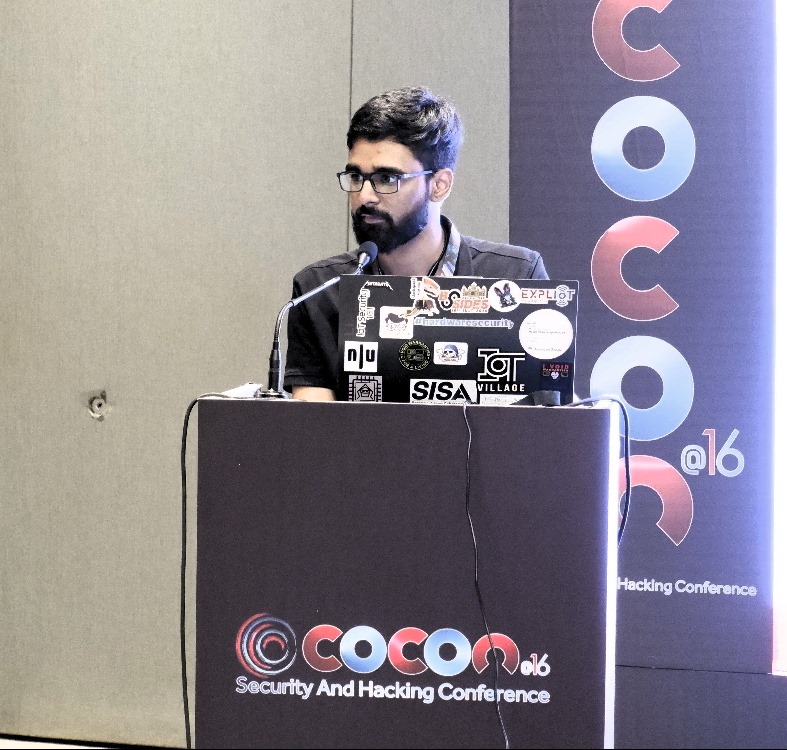

Secure Code Village
Secure coding is no longer an afterthought—it is a necessity. As organizations strive to build secure applications, security must be integrated at every stage of development. Secure Code Village (https://securecodevillage.com/ ) proposed one-day, hands-on experience at VULNCON 2025, dedicated to empowering developers, security engineers, and DevSecOps teams with practical skills and knowledge to build secure software from the ground up.
This initiative aims to provide attendees with a unique learning opportunity through interactive workshops, Code Capture The Flag (Code CTF) challenges, and live demonstrations. By incorporating Secure Software Development Lifecycle (Secure SDLC), DevSecOps automation, and shifting left in security, the Secure Code Village will equip participants with the skills needed to proactively identify and mitigate security risks in their code. This session aligns with Vulncon's mission to advance cybersecurity awareness and best practices.


Workshops
Cloud Breach Tactics: Enumeration to Initial Access
The most valuable findings in modern penetration tests start with effective cloud enumeration. This workshop teaches techniques to discover cloud resources and gain initial access into AWS, GCP, and Azure environments. You'll learn methods used in professional cloud penetration testing and red team assessments. Whether you're a pentester, offensive security consultant, or bug bounty hunter, you'll gain the edge to discover high-impact vulnerabilities that others miss.
Most companies now use cloud services, creating a unique attack surface with its own security challenges. This workshop shows you how to find and exploit weaknesses in cloud environments.
In this 4-hour hands-on session, you will learn:
- Enumerating Cloud Footprint
- Public Resource Discovery
- Exposed Secrets (and where to find them)
- From Discovery to Access
The workshop includes real-world demonstrations and hands-on exercises. You'll get practical experience with the discussed tools and methods.
We'll end with an exciting Capture The Flag (CTF) challenge to apply everything you've learned during the workshop.
Ideal Audience:
This workshop is best for individuals aiming to break into cloud environments, including:
- Pentesters Specializing in Cloud Security
- Offensive Security Engineers
- Cloud Security Consultants
- Security Engineers
- Bug Hunters
What to Expect:
- Hands-on labs
- Slides
- CTF & Fun
What Not to Expect:
- Mitigation against these attacks
- Mastering cloud platforms - truly mastering multi-cloud takes time
Requirements:
Attendees need internet connectivity and personal laptops during the workshop. Prerequisites to setup before workshop will be shared a week before workshop.


Threat Hunting and Detection - How Modern Data-Driven Threat Hunting is Done
In today's rapidly evolving threat landscape, traditional security monitoring is no longer sufficient. Modern threat hunting requires a data-driven approach that leverages advanced analytics, algorithms, and security intelligence. This session will provide an in-depth look at how cybersecurity teams can proactively detect threats by applying Jupyter Notebooks, Python-based analytics, and Outlier Detection techniques using Numpy and Pandas.
Join us for a technical deep dive into real-world threat hunting scenarios, where we will explore:
- The fundamentals of data-driven threat hunting.
- How to leverage Jupyter Notebooks for security analysis.
- Outlier detection algorithms to identify anomalies in security logs.
- Hands-on techniques using Numpy & Pandas for large-scale data analysis.
We will also walk through live demonstrations and interactive case studies that showcase how to detect stealthy threats hidden within massive datasets.
Key Takeaways:
- Understanding modern threat hunting methodologies.
- Using Jupyter Notebooks for security research and detection.
- Implementing Outlier Detection for anomaly-based threat detection.
- Practical data analysis techniques with Numpy & Pandas.
- Real-world demos and case studies of threat hunting in action.
Requirements:
Attendees need internet connectivity and personal laptops during the workshop. Prerequisites to setup before workshop will be shared a week before workshop.

Dynamic Instrumentation on Linux/Android using Frida
The ability to perform dynamic instrumentation and peek into processes is close to a superpower when it comes to debugging and reverse engineering applications.
Frida is a world-class scriptable dynamic binary instrumentation toolkit for dynamic analysis and reverse-engineering. FRida lets you inject snippets of JavaScript or your own library into native apps on Windows, macOS, GNU/Linux, iOS, Android, and QNX. FRida also provides you with some simple tools built on top of the Frida API. Simply put, if you want to be a Thor when debugging or reverse engineering black-box apps, Frida is your Mjölnir.
This training is for attendees who would like to get up to speed with FRida and perform dynamic instrumentation in Linux/Android environment. You'll learn to use FRida to peek into black-box binaries on Linux, apps on Android and subvert the protection mechanisms.
The workshop will begin with an introduction to Frida, highlighting its core functionalities and its application in various contexts. We will then delve into several practical use cases, showcasing how Frida can be employed to perform security testing. We will cover some advanced concepts such as writing custom Frida scripts, memory manipulation and RASP hooking.
By the end of the workshop, attendees will gain a comprehensive understanding of Frida's capabilities and be equipped with practical knowledge to leverage advanced dynamic instrumentation for security testing, research and application analysis.
- This is a workshop for you if your answer is yes to any of the following questions:
- Have your ever wanted to peek inside a black box process on your OS and didn’t know the right tools to use?
- Were you tasked with pentesting thick-client apps, binaries or Android apps with no docs and wanted to understand the inner workings?
- Did you ever play a desktop game and wondered if you could control the outcome in your favour by fiddling with the game at runtime?
- Have you ever wanted to subvert an Android application’s security by bypassing black-box security mechanisms such as encryption/RASP?


Building a Kubernetes Breach & Attack Simulation Program From Scratch: A Hands-On Practical Guide
This workshop will begin by explaining the goals and objectives of a Kubernetes Breach & Attack Simulation (BAS) program. It will cover fundamental terms and address why BAS is crucial for Kubernetes environments and how to implement it effectively.
It will delve into Kubernetes architecture, explaining the roles of various components within its ecosystem. Next, it will include Threat Modeling of Kubernetes cluster components to explain its attack surface. This section will also feature a Kubernetes attack matrix (mapped on MITRE) to illustrate various potential attack vectors.
To provide an understanding of how to initiate and mature a Kubernetes BAS program, We will discuss a K8s BAS Maturity Matrix. This will help participants learn how to start from scratch and gradually enhance their defenses within a Kubernetes environment.
The workshop will then explore how to conduct atomic testing for a Kubernetes BAS program and progress towards micro and full emulation. This section will also explain the necessary architecture for this setup.
Finally, we will provide a live demo of an end-to-end attack simulation on a Kubernetes cluster. Using a Python-coded scenario, this demo will showcase how to execute a MITRE ATT&CK-mapped attack (Full Emulation plan), step-by-step, on a K8s cluster.
The aim is to not only simulate a realistic attack but also to identify potential detection gaps and areas for improvement in the current defense strategies.

Our Sponsors
T-Shirt
Lanyard
Workshop
Goodie Bag
Happy Hour
Program Guide
CTF Sponsor
Exhibitors
Community Partners