Whack-a-Clue: Chasing Timestamps across the World
Modern threat actors don't rely on a single persistence mechanism — they weaponize time itself.
From autorun entries and scheduled tasks to registry-based triggers, Git hooks, IoT callbacks, and logic-driven execution chains, sophisticated malware quietly spreads across heterogeneous environments and activates under carefully crafted conditions.
These artefacts surface across laptops, servers, mobile devices, embedded systems, and cloud-connected infrastructure, leaving investigators with the difficult task of reconstructing a coherent chain of infection from fragmented evidence.
This workshop explores how investigators can automatically correlate and reconstruct those events by building a lightweight forensic timeline engine in Go.
What Participants Will Build
Participants will implement a lightweight, cross-platform forensic tooling pipeline capable of:
- Parsing artefacts from multiple operating systems
- Normalizing heterogeneous timestamp formats
- Correlating events into a unified timeline
- Visualizing infection chains and propagation paths
- Producing investigative timelines without relying on commercial DFIR suites
Who Should Attend
Learning Objectives
Workshop Flow
Kickoff & Motivation
Timeline reconstruction in DFIR and how malware leverages time-based execution.
Go for Forensics
Go fundamentals, static binaries, concurrency, and filesystem handling.
Infection Chain Fundamentals
Persistence artefacts, propagation techniques, and investigative indicators.
Timestamp Parsing & Correlation
Normalizing formats, sorting events, and generating timelines.
Real-World Caveats
Clock skew, timezone inconsistencies, and anti-forensic behaviour.
Hands-On Case Study
Reconstructing a simulated multi-device infection chain using Go tooling.
Wrap-Up & Discussion
Discussion around extending the tooling, integrating it into DFIR workflows, and handling real-world investigative challenges.
Participants are encouraged to continue evolving the prototype into custom forensic pipelines tailored to their own environments.
Workshop Speakers
Experts & Mentors
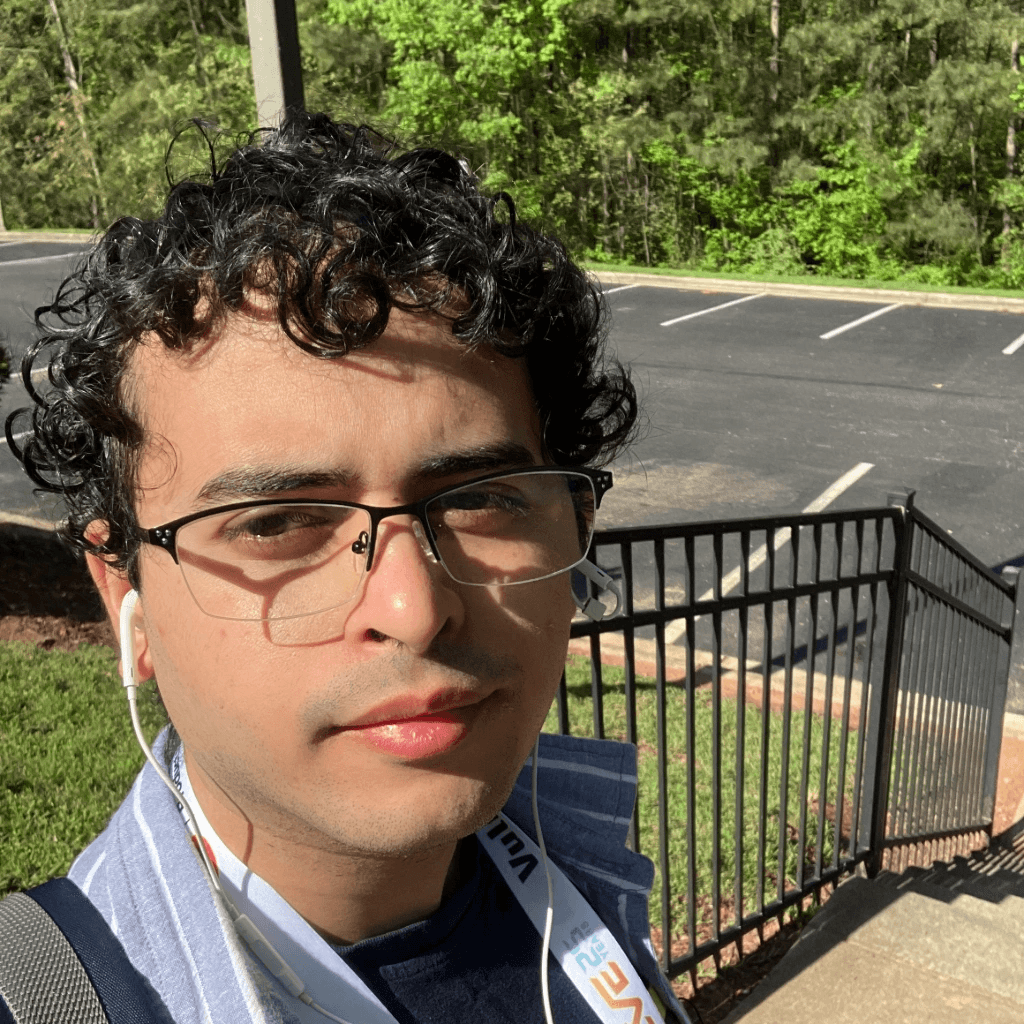
Dr. Gaurav Gogia
Sr. Software Engineer II @ Fujitsu Research
He has published multiple research papers and presented at conferences including VulnCon USA, NullCon, DFRWS, and GDG. He has also served as a guest lecturer at NFSU, mentoring students in security and forensics research.
Outside of security, he enjoys exploring cuisines, reading fiction, and playing video games.